(BRUXELLES2) Les diplomates des « 27″ doivent préciser aujourd’hui l’accord de principe sur le Centre d’opérations (OpsCenter) pour la Corne de l’Afrique. Un des derniers points en discussion restait le financement de l’OpsCenter. Après étude de plusieurs propositions – financement par le mécanisme Athena pour les militaires, par la Commission européenne (sur le budget Pesc) pour les civils ou par le Service européen d’action extérieure (SEAE) – c’est finalement cette solution qui devrait être retenue. Le service diplomatique paierait sur son budget administratif les frais inhérents à l’OpsCenter. Il faut cependant voir qu’on n’est pas sur une structure très couteuse ni très épaisse. Loin de là. L’OpsCenter devrait ainsi disposer – selon la fiche technique – d’une quinzaine de personnes : 6 mises à disposition par l’Etat-Major militaire de l’UE ou le SEAE (donc déjà enregistrées et payées) ; 9 mises à disposition par les Etats membres, sous la forme d’experts nationaux détachés (dont le salaire reste assuré par l’Etat membre, seuls les frais de mission et de fonctionnement étant assurés au niveau européen). En tout l’OpsCenter pourrait coûter, selon les informations recueillies par B2, environ 100.000 euros. Une bagatelle au regard d’autres budgets existants, tant dans les Etats membres que dans l’Union européenne.


Somalia, Kenya, Nigeria bombings deadlier in 2011
March 15, 2012
Source: The Associated Press

Bomb attacks in Nigeria, Kenya and Somalia rose in 2011 as al-Qaida-affiliated terror groups used more sophisticated devices to kill more people with each explosion, the Pentagon’s anti-IED unit said.
Nigeria saw a nearly fourfold jump in the number of improvised explosive device incidents last year, while Kenya saw an 86 percent increase, according to the unit. Underscoring the threat, both nations saw deadly blasts last weekend: A car bomb attack on a church during Mass in Nigeria and grenades thrown at Kenyans as they waited at a crowded bus stop.
Militants last year began using a deadlier type of bomb known as a shaped charge for the first time in both Somalia and Nigeria, John Myrick, a U.S. military bomb expert told The Associated Press. Advanced bomb-makers use shaped charges to increase the force of a bomb so that it can penetrate armor.
Such deadly explosives were used repeatedly by militants at the height of the Iraq war, and to a lesser extent in Afghanistan. The migration of the deadlier bombs to Africa is evidence that more sophisticated al-Qaida-linked groups are advising and training African militants.
While Somalia saw only a small increase in attacks, the newer technology lead to greater casualties and deeper impact on Africa Union forces, Myrick said.
On Wednesday, a suicide bomb attack aimed at the main government compound in Mogadishu killed at least three people, said the spokesman for the African Union force known as AMISOM.
Bombs in Somalia “are definitely more sophisticated and they’re definitely more effective against AMISOM armored vehicles, which represents an advance in the capabilities of the insurgents,” said Myrick, the chief of the global missions task force for the Pentagon’s Joint IED Defeat Organization.
Myrick said that the more effective bombs and attacks “indicate an increase in logistical support from some of the more sophisticated groups on the continent, and also an increase in training.”
Specifically, the anti-IED unit says al-Qaida’s North African branch is increasing support to Nigerian militants, and another affiliate, al-Qaida in the Arabian Peninsula (AQAP), is supporting Somali militant groups.
Nigeria saw 196 bomb incidents in 2011, compared with 52 incidents in 2010, U.S. military numbers show. An incident is when a bomb detonates or is discovered before detonation. The Pentagon’s anti-IED unit expects Nigeria to see a slight increase in bomb incidents this year, before attack numbers plateau because militants will have reached their capacity to produce them, Myrick said.
The Joint IED Defeat Organization says militants are increasingly targeting events that will produce mass casualties. A Christmas Day blast that struck St. Theresa Catholic Church near Nigeria’s capital killed 44 people.
Nigeria Police Commissioner Ambrose Aisabor, who oversees the Nigeria Police Force’s anti-bomb squad, blamed the increase on a radical Islamist sect known as Boko Haram, whose name means “Western education is sacrilege” in the Hausa language of Nigeria’s north.
“Since the past two years, the activities of Boko Haram have been on the increase,” he told AP. “A lot of IEDs are being detonated in the northeastern part of the country.”
Officers with the anti-bomb squad recently returned from a U.S. training session on explosives organized by the U.S. Embassy and the FBI. The FBI already has an agent working with Nigerian authorities on improvised explosives and how to conduct investigations after a bombing, U.S. Ambassador Terence P. McCulley has told AP.
Still, the police force remains mired by ineffective training inside the country, poor equipment and a corrupt system that drives officers to seek bribes on a regular basis.
The poor training was apparent Feb. 14, when a bomb squad officer approached a suspicious plastic bag in the city of Kaduna, where other explosives had detonated that day. Video by the state-run Nigerian Television Authority showed the officer, wearing no protective gear, look inside the bag. The explosives detonated, killing him instantly.
State-run TV aired the video throughout the day, intensifying fears of a public already overwhelmed by Boko Haram violence.
Across Africa, the U.S. military said the number of IED incidents rose from 547 in 2010 to 626 last year, a 14 percent increase. Algeria saw the number of bomb incidents drop from 251 to 137.
Somalia saw a slight rise — from 182 to 191 — while incidents in neighboring Kenya jumped from 14 to 26. Many of Kenya’s bomb attacks were near the Somali border and appeared to have been planted by Somali militants al-Shabab.
Kenya also suffered several grenade attacks in its capital. Al-Shabab denied it was behind last weekend’s grenade blasts, which killed nine people. The research firm Eurasia Group said if al-Shabab didn’t carry out the blasts the attacks show that Kenya faces threats from potentially several terror groups.
Col. Cyrus Oguna, the officer in charge of the Kenyan military forces that moved into Somalia in October, said his troops encountered many IEDs at the beginning of its operation and lost “a couple” soldiers. But he said his forces have since implemented counter-IED strategies, reducing the bomb’s frequency and effectiveness.
The commander of AMISOM troops in Somalia said his forces are seeing “improved technology” in IEDs.
“We see a lot in common with what happened and is still happening in Afghanistan and Iraq, and that for us confirms that the operations of al-Qaida and al-Shabab are the same,” Maj. Gen. Fred Mugisha said. “We have not started seeing this today. We have seen this for some time.”
Al-Shabab announced a merger with al-Qaida earlier this year. Myrick said the alliance won’t necessarily net al-Shabab more bomb-making experts, but he said it could open a new funding stream to purchase bomb-making materials.
IEDs are the weapon of choice for terrorists and insurgents the world over because of how easy they are to make. As Myrick said: “An 8-year-old can put together an IED if they try.” In addition, IED blasts garner more attention.
“People in the press in general tend to take a more active view of things that go boom instead of things that go bang. Shooting up a refugee camp, while newsworthy, would not get the amount of coverage as an IED in a refugee camp,” he said.
“We’ll see this problem for decades. JIEDDO’s view is that the IED is going to remain the weapon of choice for insurgents and terrorists for at least the next 40 years.”
By JASON STRAZIUSO
Source: The Associated Press
Bomb attacks in Nigeria, Kenya and Somalia rose in 2011 as al-Qaida-affiliated terror groups used more sophisticated devices to kill more people with each explosion, the Pentagon’s anti-IED unit said.
Nigeria saw a nearly fourfold jump in the number of improvised explosive device incidents last year, while Kenya saw an 86 percent increase, according to the unit. Underscoring the threat, both nations saw deadly blasts last weekend: A car bomb attack on a church during Mass in Nigeria and grenades thrown at Kenyans as they waited at a crowded bus stop.
Militants last year began using a deadlier type of bomb known as a shaped charge for the first time in both Somalia and Nigeria, John Myrick, a U.S. military bomb expert told The Associated Press. Advanced bomb-makers use shaped charges to increase the force of a bomb so that it can penetrate armor.
Such deadly explosives were used repeatedly by militants at the height of the Iraq war, and to a lesser extent in Afghanistan. The migration of the deadlier bombs to Africa is evidence that more sophisticated al-Qaida-linked groups are advising and training African militants.
While Somalia saw only a small increase in attacks, the newer technology lead to greater casualties and deeper impact on Africa Union forces, Myrick said.
On Wednesday, a suicide bomb attack aimed at the main government compound in Mogadishu killed at least three people, said the spokesman for the African Union force known as AMISOM.
Bombs in Somalia “are definitely more sophisticated and they’re definitely more effective against AMISOM armored vehicles, which represents an advance in the capabilities of the insurgents,” said Myrick, the chief of the global missions task force for the Pentagon’s Joint IED Defeat Organization.
Myrick said that the more effective bombs and attacks “indicate an increase in logistical support from some of the more sophisticated groups on the continent, and also an increase in training.”
Specifically, the anti-IED unit says al-Qaida’s North African branch is increasing support to Nigerian militants, and another affiliate, al-Qaida in the Arabian Peninsula (AQAP), is supporting Somali militant groups.
Nigeria saw 196 bomb incidents in 2011, compared with 52 incidents in 2010, U.S. military numbers show. An incident is when a bomb detonates or is discovered before detonation. The Pentagon’s anti-IED unit expects Nigeria to see a slight increase in bomb incidents this year, before attack numbers plateau because militants will have reached their capacity to produce them, Myrick said.
The Joint IED Defeat Organization says militants are increasingly targeting events that will produce mass casualties. A Christmas Day blast that struck St. Theresa Catholic Church near Nigeria’s capital killed 44 people.
Nigeria Police Commissioner Ambrose Aisabor, who oversees the Nigeria Police Force’s anti-bomb squad, blamed the increase on a radical Islamist sect known as Boko Haram, whose name means “Western education is sacrilege” in the Hausa language of Nigeria’s north.
“Since the past two years, the activities of Boko Haram have been on the increase,” he told AP. “A lot of IEDs are being detonated in the northeastern part of the country.”
Officers with the anti-bomb squad recently returned from a U.S. training session on explosives organized by the U.S. Embassy and the FBI. The FBI already has an agent working with Nigerian authorities on improvised explosives and how to conduct investigations after a bombing, U.S. Ambassador Terence P. McCulley has told AP.
Still, the police force remains mired by ineffective training inside the country, poor equipment and a corrupt system that drives officers to seek bribes on a regular basis.
The poor training was apparent Feb. 14, when a bomb squad officer approached a suspicious plastic bag in the city of Kaduna, where other explosives had detonated that day. Video by the state-run Nigerian Television Authority showed the officer, wearing no protective gear, look inside the bag. The explosives detonated, killing him instantly.
State-run TV aired the video throughout the day, intensifying fears of a public already overwhelmed by Boko Haram violence.
Across Africa, the U.S. military said the number of IED incidents rose from 547 in 2010 to 626 last year, a 14 percent increase. Algeria saw the number of bomb incidents drop from 251 to 137.
Somalia saw a slight rise — from 182 to 191 — while incidents in neighboring Kenya jumped from 14 to 26. Many of Kenya’s bomb attacks were near the Somali border and appeared to have been planted by Somali militants al-Shabab.
Kenya also suffered several grenade attacks in its capital. Al-Shabab denied it was behind last weekend’s grenade blasts, which killed nine people. The research firm Eurasia Group said if al-Shabab didn’t carry out the blasts the attacks show that Kenya faces threats from potentially several terror groups.
Col. Cyrus Oguna, the officer in charge of the Kenyan military forces that moved into Somalia in October, said his troops encountered many IEDs at the beginning of its operation and lost “a couple” soldiers. But he said his forces have since implemented counter-IED strategies, reducing the bomb’s frequency and effectiveness.
The commander of AMISOM troops in Somalia said his forces are seeing “improved technology” in IEDs.
“We see a lot in common with what happened and is still happening in Afghanistan and Iraq, and that for us confirms that the operations of al-Qaida and al-Shabab are the same,” Maj. Gen. Fred Mugisha said. “We have not started seeing this today. We have seen this for some time.”
Al-Shabab announced a merger with al-Qaida earlier this year. Myrick said the alliance won’t necessarily net al-Shabab more bomb-making experts, but he said it could open a new funding stream to purchase bomb-making materials.
IEDs are the weapon of choice for terrorists and insurgents the world over because of how easy they are to make. As Myrick said: “An 8-year-old can put together an IED if they try.” In addition, IED blasts garner more attention.
“People in the press in general tend to take a more active view of things that go boom instead of things that go bang. Shooting up a refugee camp, while newsworthy, would not get the amount of coverage as an IED in a refugee camp,” he said.
“We’ll see this problem for decades. JIEDDO’s view is that the IED is going to remain the weapon of choice for insurgents and terrorists for at least the next 40 years.”
By JASON STRAZIUSO
nord de Mogadiscio : Les forces somaliennes et de l’Amisom prennent le contrôle d’un bastion des «shebab»
Dimanche, 04 Mars 2012
Écrit par APS
 Les forces du gouvernement somalien de transition appuyées par la force de paix de l’Union africaine en Somalie (Amisom) ont pris un quartier de la périphérie nord de Mogadiscio qui était sous contrôle du groupe d’insurgés «shebab» à l’issue d’une brève offensive, a indiqué une source militaire.Les troupes du gouvernement de transition (TFG), soutenues par la force de l’Union africaine, «ont avancé vers les dernières positions (des shebab) à Suqaholaha, prenant le contrôle de quartiers clés», a affirmé Abdulahi Ali Anod, commandant des forces somaliennes. Selon des témoins, cités par des agences de presse, l’Amisom avait déclenché un tir d’artillerie massif avant d’envoyer des chars et son infanterie sur le terrain. Il y a eu d’intenses bombardements.
Trois soldats ont été blessés. L’Amisom a reconnu que deux de ses soldats avaient été blessés.
«L’opération d’aujourd’hui a étendu, avec succès, les défenses de la ville et privera les terroristes d’un terrain important à partir duquel ils attaquaient la population», a affirmé pour sa part le commandant de l’Amisom, Fred Mugisha. «Elle va permettre aux civils de rentrer chez eux et de reprendre une vie normale», a-t-il estimé, appelant les Somaliens à «coopérer au maximum pour la paix». En août, les shebab avaient été contraints de quitter leurs positions clés à l’intérieur de la capitale sous la pression des forces du TFG et de l’Amisom.
Il n’y a plus de ligne de front à Mogadiscio.
Mais les insurgés ont conservé des bases en périphérie de la capitale et mènent une insurrection dans la zone en multipliant les attaques à la grenade, aux véhicules piégés.
AMISOM to Move Beyond Mogadishu
Joint Security Committee Decides to Deploy AMISOM to Southern Regions
By SHIINE OMAR 03/14/201
 |
| Joint Security Meeting |
After two days of meetings of the Joint Security Committee in Mogadishu , officials agreed to deploy African Union peacekeeping forces (AMISOM) in Somalia
Officials attending the meeting included Somalia ’s Transitional Federal Government (TFG) Prime Minister Abdiweli Mohamed Ali, the special representative of United Nations Augustine Mahiga, and representatives from the African Union (AU), European Union , Somalia
"Deploying troops from the African Union to conduct operations in southern and central Somalia
Chief of Ugandan Defense Forces General Aronda Nyakairimi, visiting Mogadishu
"AMISOM troops will deploy to the southern and central parts of Somalia
General Fred Mugisha, the AMISOM force commander, said that new contribution from Sierra Leone
“Kenyan forces joined AMISOM to work with Somalia ’s National Forces to liberate the port town of Kismayo
The ASWJ chairman, Professor Hirsi, who attended the meetings in Mogadishu
"ASWJ is ready to combine their forces with the TFG if they fight al-Shabaab," Professor Hirisi told Somalia
 |
| ©Somalia Report, all rights reserved AMISOM Troops Get Ready for |
TFG Minister of Interior Affairs and National Security Abdisamad Ma’allin Mohamud Sheikh Hassan also confirmed the deployment.
"The meetings were planned to ensure the security of country and we discussed ideas with officials of the African Union, United Nations including other delegates from international community to send AMISOM troops to key town recently liberated from al-Shabaab such as Beledweyne and Baidoa districts to keep the security in that area and the country. We are sure that our brothers will help out our country," said the minister.
“The delegates from international community like United States of America and Italy have pledged to support our forces to help us wipe out al-Shabaab from Somalia
If this process of deploying AMISOM beyond the capital succeeds, many Somali residents believe that will help the Somali government regain their dignity and rebuild their country after they push al-Shabaab from the country, according to locals who spoke privately to Somalia
Quelques détails sur l’extension territoriale d’Atalanta
(BRUXELLES2, exclusif) Selon un projet de décision que j’ai pu consulté, l’extension territoriale de l’opération anti-piraterie de l’Union européenne (Eunavfor Atalanta) porterait sur trois points opérationnels ainsi que sur le transfert des suspects. Cette décision devrait être adoptée rapidement, après que le Royaume-Uni lèvera sa réserve parlementaire, ce qui devrait être fait rapidement, m’ont confirmé un diplomate européen et britannique. Cette décision va permettre au commandant de l’opération, le contre-amiral Duncan Potts d’adapter le plan d’opération de manière plus offensive.
Opérations et surveillance
• Les forces déployées pourront « opère(r) en Somalie » et non plus seulement « au large des côtes de la Somalie et des pays voisins dans les zones maritimes de la région de l’océan Indien ».
• La surveillance des zones au large des côtes de la Somalie comprendra également « ses eaux territoriales et ses eaux intérieures », présentant des risques pour les activités maritimes, en particulier le trafic maritime.
• Atalanta pourra fournir une « protection » des navires affrétés par le programme alimentaire mondial (PAM), « y compris lorsqu’ils naviguent dans les eaux territoriales et intérieures de la Somalie ». Jusqu’à présent, ils s’arrêtaient aux abords du port de Mogadiscio où le relais était pris par les forces de l’AMISOM. Ce qui n’était pas toujours évident. Cette protection comprend l’escorte par un navire ou/et « la présence à bord des navires concernés d’éléments armés d’Atalanta ».
Arrestation et transfert des suspects
• Les suspects, ayant l’intention de commettre, commettant ou ayant commis des actes de piraterie ou des vols à main armée pourront être appréhendés et retenus par Atalanta dans les « eaux intérieures » de Somalie comme en « Haute mer.

• Les suspects interceptés « dans les eaux territoriales, les eaux intérieures ou les eaux archipélagiques d’autres États de la région, en accord avec ceux-ci, ainsi que les biens ayant servi à accomplir ces actes » pourront être « transférés aux autorités compétentes de l’État concerné ou, avec le consentement de ce dernier, aux autorités compétentes d’un autre État. » Ce qui donne la base juridique à l’organisation d’un accord de transfert direct vers les autorités de Somalie (central, Puntland ou Somaliland) ou permet le transfert de personnes arrêtées dans ces zones à l’Ile Maurice ou à l’ile des Seychelles pour jugement par exemple (avant le retour en prison en Somalie)
Kenya - Deux réfugiés somaliens abattus dans un camp de Dadaab
14 Mars 2012 - 13:59
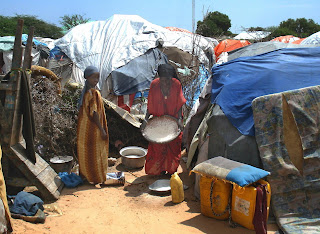 Deux réfugiés somaliens ont été abattus et un troisième blessé par des inconnus mardi soir dans un des camps du complexe de Dadaab, dans l'est du Kenya, a-t-on appris mercredi de source officielle.
"Nous pouvons confirmer que deux personnes ont été tuées et une autre blessée lors d'une fusillade au camp de Ifo à Dadaab la nuit dernière", a indiqué à l'AFP une porte-parole du Haut commissariat aux réfugiés des Nations Unies (HCR), qui gère le camp.
"L'enquête préliminaire de la police suggère qu'il s'agit d'un acte de vengeance. Certains réfugiés ont été pris pour cibles et tués, les agresseurs sont partis sans rien voler", a ajouté la porte-parole.
Deux réfugiés somaliens avaient déjà été abattus à deux jours d'intervalle les 30 décembre et 1er janvier derniers, dans les camps d'Ifo et de Hagadera du même complexe. Il s'agissait alors à chaque fois de responsables d'équipes de sécurité locales travaillant avec les organisations humanitaires et avec la police locale pour coordonner la sécurité dans le camp.
La police avait alors soupçonné les islamistes somaliens shebab d'être à l'origine de ces attaques.
Dadaab est le plus grand complexe de camps de réfugiés au monde et abrite quelque 460.000 personnes, en grande majorité des Somaliens qui fuient, depuis 20 ans, un état de guerre civile permanent dans leur pays. Récemment, des dizaines de milliers de Somaliens s'y sont aussi réfugiés pour échapper à la sécheresse et la faim dans leur pays.
La sécurité est devenue, en particulier depuis l'an dernier, une préoccupation permanente dans les camps de Dadaab, proches de la frontière somalienne. La plupart des ONG s'y déplacent sous escorte.
En octobre, deux employées espagnoles de Médecins sans frontières (MSF) y avaient été enlevées, avant d'être emmenées en Somalie. Les organisations humanitaires avaient alors réduit leurs activités à celles jugées les plus indispensables aux réfugiés, ainsi que les séjours de leurs personnels expatriés sur place. Ces mesures ont été légèrement assouplies depuis quelques semaines.
© AFP
http://www.afreeknews.com/journal.php?flash_id=2573
Somalia plagued by al-Shabaab ‘pockets’
March 12, 2012
Source: UPI

A Kenyan military official said there were pockets of al-Shabaab that were creating “disharmony” in war-torn Somalia.
Al-Shabaab claimed it killed more than 70 soldiers and recovered weapons during clashes with African Union forces in Yurkud in southwestern Somalia, al-Jazeera reports. The al-Qaida ally said the attack was one of the deadliest for Ethiopian forces contributing to the AU force.
Kenyan officials operating with the AU said they launched a series of operations against al-Shabaab hold outs near the shared Kenyan-Somali border.
“These are pockets of remnants of al-Shabab that have been left behind and their main purpose is to try to disrupt our activities in that area and cause disharmony between our forces and the local communities,” Kenyan military spokesman Col. Cyrus Ogona was quoted by the Arab broadcaster as saying.
AU forces are supporting pro-government troops to expand the influence of the transitional Somali government.
World leaders ata London conference for Somalia last month said the country was turning the corner after nearly 20 years at war.
There hasn’t been a functioning central government in Somalia since the 1990s.
Source: UPI
A Kenyan military official said there were pockets of al-Shabaab that were creating “disharmony” in war-torn Somalia.
Al-Shabaab claimed it killed more than 70 soldiers and recovered weapons during clashes with African Union forces in Yurkud in southwestern Somalia, al-Jazeera reports. The al-Qaida ally said the attack was one of the deadliest for Ethiopian forces contributing to the AU force.
Kenyan officials operating with the AU said they launched a series of operations against al-Shabaab hold outs near the shared Kenyan-Somali border.
“These are pockets of remnants of al-Shabab that have been left behind and their main purpose is to try to disrupt our activities in that area and cause disharmony between our forces and the local communities,” Kenyan military spokesman Col. Cyrus Ogona was quoted by the Arab broadcaster as saying.
AU forces are supporting pro-government troops to expand the influence of the transitional Somali government.
World leaders ata London conference for Somalia last month said the country was turning the corner after nearly 20 years at war.
There hasn’t been a functioning central government in Somalia since the 1990s.
Kenya: Command Structure for Amisom due this week
March 12, 2012
Source: Capital FM/allAfrica

Structures and the command levels for the African Union troops in the Somalia operation will soon be released following a meeting in Addis Ababa on Friday.
During the weekly press briefing on Saturday, Col Cyrus Oguna of the department of defence said the meeting attended by high level key political leadership and military leadership discussed and agreed on the positions that countries that form the African Union Mission in Somalia (AMISOM) will occupy in the four levels of command.
“There was a meeting held yesterday (Friday) to work out on the command structure in regard with which position will each country occupy. In the course of next week we will inform you about the details of what transpired,” Oguna asserted.
Source: Capital FM/allAfrica
Structures and the command levels for the African Union troops in the Somalia operation will soon be released following a meeting in Addis Ababa on Friday.
During the weekly press briefing on Saturday, Col Cyrus Oguna of the department of defence said the meeting attended by high level key political leadership and military leadership discussed and agreed on the positions that countries that form the African Union Mission in Somalia (AMISOM) will occupy in the four levels of command.
“There was a meeting held yesterday (Friday) to work out on the command structure in regard with which position will each country occupy. In the course of next week we will inform you about the details of what transpired,” Oguna asserted.
Mogadiscio: attentat islamiste au complexe présidentiel, au moins 2 tués (14 mars 2012, 12h07)

 |
Un Casque bleu ougandais dans ll'enceinte du palais présidentiel à Mogadiscio (AFP/Archives, Roberto Schmidt) |
MOGADISCIO — Au moins deux personnes, outre le kamikaze, ont été tuées mercredi à Mogadiscio dans un attentat suicide, revendiqué par les islamistes somaliens shebab, à l'intérieur du complexe ultra-sécurisé Villa Somalia abritant la présidence somalienne et divers bâtiments officiels.
"Les premières informations font état d'au moins trois morts, dont le kamikaze, et de six blessés dans l'explosion", a déclaré à l'AFP Abdulahi Hasan Barise, un porte-parole de la police somalienne.
Un autre responsable de la police somalienne, Mohamed Adan, a indiqué à l'AFP que le kamikaze s'était fait exploser devant l'entrée de la résidence du président du Parlement somalien de transition, située à l'intérieur du complexe Villa Somalia.
"Les moujahidines ont mené une spectacuaire opération martyr à l'intérieur du palais présidentiel (...) au moins seize personnes ont été tuées", ont affirmé les shebab sur leur compte twitter.
Le mouvement, récemment intégré à Al-Qaïda, a assuré avoir perpétré l'attentat au moment d'une réunion officielle et ajouté que des responsables gouvernementaux et des soldats progouvernementaux figuraient parmi les victimes.
Le président du Parlement, Sharif Hassan Cheikh Adan, n'était pas à sa résidence au moment de l'attentat, a affirmé de son côté à l'AFP, sous le couvert de l'anonymat, un responsable de sa sécurité.
Le chef de l'Etat somalien était quant à lui mardi en déplacement à Addis Abeba, mais il n'était pas possible dans l'immédiat de savoir s'il s'y trouvait toujours mercredi ou s'il avait rejoint Mogadiscio.
Affaiblis sur le terrain militaire, les shebab, qui ont juré la perte du fragile gouvernement somalien de transition (TFG) soutenu à bout de bras par la communauté internationale et les forces de la mission de l'Union africaine en Somalie (Amisom) avaient menacé mi-février d'intensifier leur campagne d'attentats dans la capitale somalienne.
--Déploiement des forces de sécurité--
Les forces de sécurité étaient déployées mercredi tout autour de Villa Somalia, a indiqué à l'AFP un témoin Abdi Hassan, juste après l'attentat.
Outre la présidence somalienne et la résidence du président du Parlement, Villa Somalia accueille également les bureaux du Premier ministre somalien et de plusieurs responsables du TFG, ceux du chef de l'agence nationale de sécurité, le quartier-général de la police et les bâtiments de Radio Mogadiscio.
C'est l'un des lieux les plus sécurisés de Mogadiscio, l'une des capitales les plus dangereuses du monde.
La Somalie est dépourvue d'autorité centrale depuis l'effondrement du régime du président Siad Barre en 1991 et l'instabilité politique alimente depuis deux décennies une violence permanente dans le pays, notamment à Mogadiscio.
Les shebab ont multiplié les attaques suicide ou à la grenade dans la capitale depuis qu'ils y ont abandonné en août leurs positions, sous la pression des forces du TFG et de l'Amisom.
Le 8 février, ils avaient revendiqué un attentat contre un café, voisin d'un hôtel réputé héberger des députés et responsables somaliens et situé non loin de Villa Somalia, qui avait tué au moins 15 personnes.
Outre les troupes du TFG et de l'Amisom, les rebelles islamistes, qui contrôlent encore une partie du sud et du centre de la Somalie, sont également sous la pression croissante des armées kényane dans le sud et éthiopienne dans l'ouest.
Les soldats éthiopiens les ont contraint mi-février à abandonner la ville de de Baïdoa, un de leurs bastions, dans le sud-ouest du pays.
S'ils semblent en difficulté sur le terrain militaire, les experts avertissent que les shebab sont loin d'être défaits et pourraient désormais privilégier les actions de guérilla et les attentats.
L'attentat récent le plus meurtrier à Mogadiscio reste l'explosion en octobre d'un camion piégé contre un complexe ministériel qui avait tué au moins 82 personnes.
Copyright © 2012 AFP
Sudan: Kenyan, Somali Army Clash With Al-Shabab in Lower Juba Region
March 12, 2012
Source: Shabelle Media Network/allAfrica
 Deadly clashes between Somali government soldiers supporting by Kenyan army and Al-shabab fighters were reported on Monday in parts of Lower Jubba region, south of the country, witnesses say.
News reports from the battlefields in Lower Jubba region of Somalia say that an unconfirmed number of Kenyan soldiers have been killed during their clashes with Al-Qaeda-linked Somali rebels.
No independent reports were immediately available from the fighting and the claim of Somalia government military officials in southwestern region of Somalia, but the situation in the area is reported to be calm at the moment.
Inscription à :
Articles (Atom)